
Why Israel’s Biggest Amuesment Park is So Small
It’s not geography.

Writer’s note: If this sounds familiar, check your own horizon. You might be living inside the perimeter too.
1:17 AM Barcelona, Spain | 2:17 AM Gaza, Palestine | What a Regime Chooses to Fund
When you lose everything, what do you grab first? Not blankets or flour. You reach for whatever proves you are still here. That you still deserve something beautiful.
My grandmother wore pearls long before 1948. When Zionist militias forced her from Yaffa she lost the house, the orange tree, the life she’d rooted in that soil. The Nakba reduced her to a fragile body carrying a long memory. Years as a refugee in Gaza made survival a daily calculation. Yet when she finally had a few coins, she bought another string of pearls.
She wasn’t wealthy. Maybe a little particular about looking nice, sure. But she understood something the Israeli colonial state never will. Joy is infrastructure. It isn’t decoration. It can’t wait until the dust settles.
I’ve carried her pearls ever since. Not just keepsakes, but as a receipt. A tiny, defiant line item in a refugee’s ledger. And honestly, that’s exactly what my work is about. I just look at bigger ledgers. I move between photographing human rights violations, digging up erased histories, tracing paper trails of power. I read defense budgets. I track policy shifts. I watch where regimes pour their money and where they deliberately starve the rest. You learn to read a system by what it refuses to fund. Just like you can read my grandmother’s life in those pearls, you can read a regime’s soul in what it chooses to build and what it lets decay.
Why Israel’s Biggest Amusement Park Is So Tiny
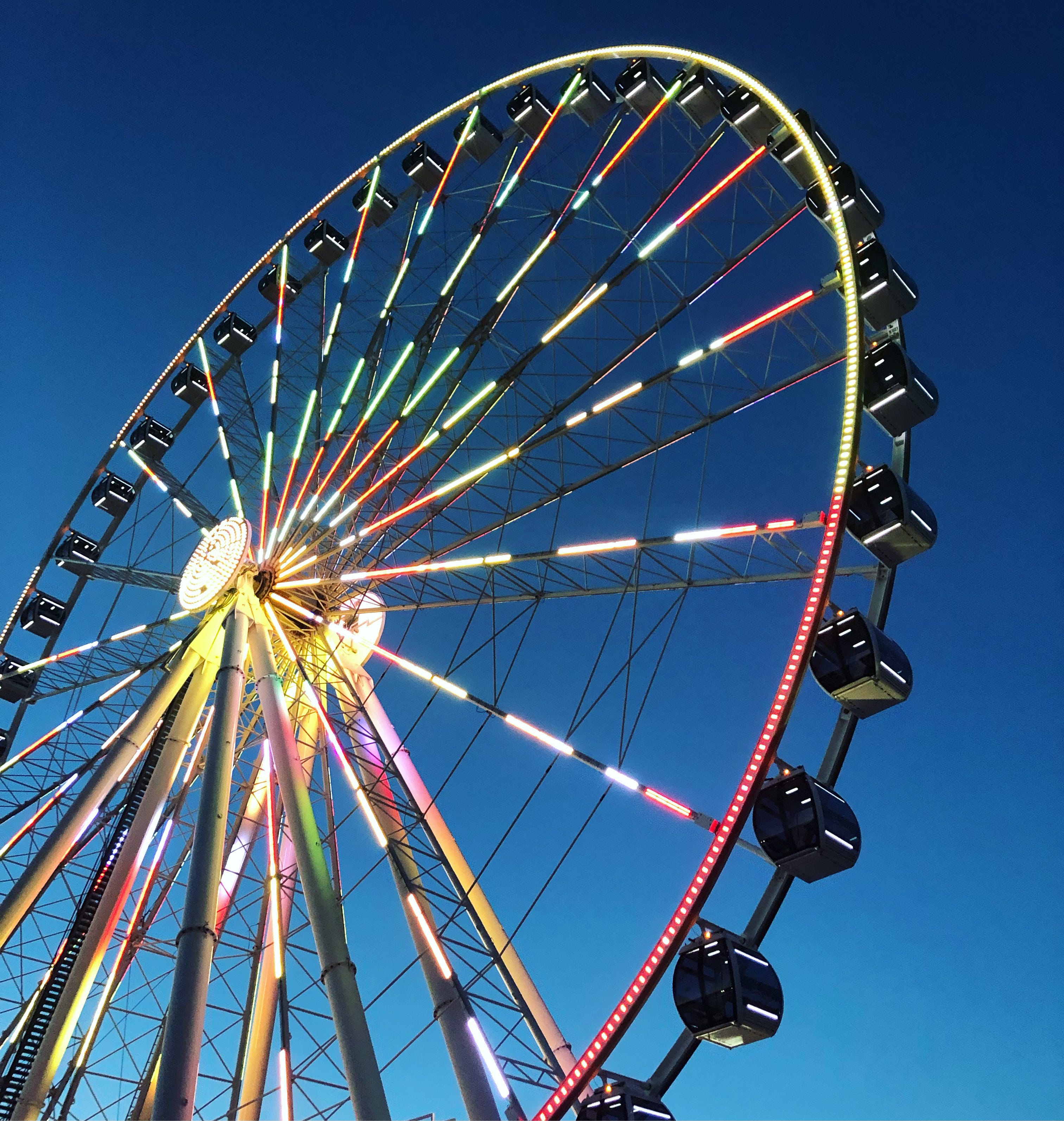
Between military reports and fear politics, a pattern. A settler-colonial regime marketing itself as a “start-up nation,” backed by billions in foreign aid, has almost no civic leisure infrastructure. Superland, billed as the largest amusement park, covers under twenty acres. Fewer than twenty attractions. Barely municipal fair size.
This isn’t about space. Israel has the land. The engineering. The capital. What it lacks is the political will to build places where people can simply gather without surveillance, checkpoints, or sirens. Why refuse to fund public joy? Because the architecture of control serves a different project. Settlement expansion. Permanent occupation. Apartheid. You don’t build sprawling civic spaces when your system depends on separation. The state doesn’t build parks. It builds perimeters.
In 2024, the military budget jumped 65% to $46.5 billion. Roughly 8.8% of GDP. Steepest increase since 1967. Weapons R&D consumed 65% of national innovation funding, crowding out schools, infrastructure, leisure. Tel Aviv’s guarded tech sector flourishes while civic spaces decay. Billions flow into illegal settlements and campaigns documented by UN agencies and Israeli human-rights groups as involving widespread war crimes and genocide.
For decades, governments ruled through manufactured dread. Conscription at eighteen. Emergency drills in schools. A media ecosystem fed on existential threat. Leaders weaponize Jewish trauma, tie resistance to a specter of annihilation to consolidate power. Even former officials admit operations serve a political calculus not security.
10:45 PM
A panic economy needs perpetual crisis. Every act of resistance framed as proof of unavoidable threat. Pretext for deeper occupation.
Public opinion mirrors the machinery. June 2025: 82% of Jewish Israelis support expelling Palestinians from Gaza. Nearly half 47% endorse actions scholars call genocidal. Asked about forced starvation, 79% said they weren’t troubled by mass famine. On collective guilt, an overwhelming majority agreed there are “no innocents in Gaza.”
When majorities openly endorse structures of genocide, the regime doesn’t just commit atrocities. It institutionalizes them, then exports the blueprint.
And while we know well that joy doesn’t come from budgets, because apparently, “basic survival” wasn’t in the fiscal plan, it arrives when the people are free from supremacy and when children don’t fear hell falling from the sky. In Palestine, joy persists in small tent weddings, classrooms, dabke songs. But it’s not a victory lap, it’s a pattern. The laughter happens in the gaps between airstrikes, sometimes the song stops because the power goes out, or because someone has to run. The joy is real, but it’s tired, It’s scared and it costs everything.
My grandmother's pearls rest in a small wooden box. I open it sometimes just to watch them catch the low light. They don't glitter like state propaganda, they glow like memory. She bought them after losing everything because joy is not a luxury, it is a weapon they cannot confiscate.