Three Million Years of Life Erased
For the first time this year, sunlight slips through the skylight above my kitchen table in Dublin, though it does not arrive gently. The wind is still rattling the gutters from rain that hammered the windows only minutes earlier, a reminder that Ireland can hold four seasons in a single afternoon.
My children beg to take their bikes outside when the clouds thin, but I hesitate, remembering how I fell last week on slick pavement, sprawled like a clumsy five year old in a thirty eight year old body.
I tell them the weather cannot be trusted and they roll their eyes, certain I am exaggerating, until the rain returns in a hard sideways burst that drums against the glass and ends the conversation. Just as quickly, the sun seeps back in as though nothing happened.
We laugh about Irish weather because its volatility feels harmless; it keeps us layered and watchful, never entirely certain what the next hour will bring, yet confident that whatever arrives will eventually pass.
My friend in Gaza does not live with that assurance. They are a journalist, and I will not name them because in Gaza names can become coordinates.
In my kitchen, lentils soften and split while steam gathers along the skylight. Cumin opens in warm oil, garlic sweetens, and my children drift in and out, tearing bread before I can stop them as they wait for the hour to arrive. Outside, the wind continues its argument with the gutters, but inside there is the steady comfort of something moving toward completion.
At the same hour in Gaza, my friend stands over their own pot of lentils, moving the spoon in the same slow circle. The oil warms, the scent rises, and the ritual looks familiar enough to resemble ordinary life. They are cooking in a place their family did not survive, and I have to pause before writing that sentence because it feels impossible that a stove can remain when four bodies do not.
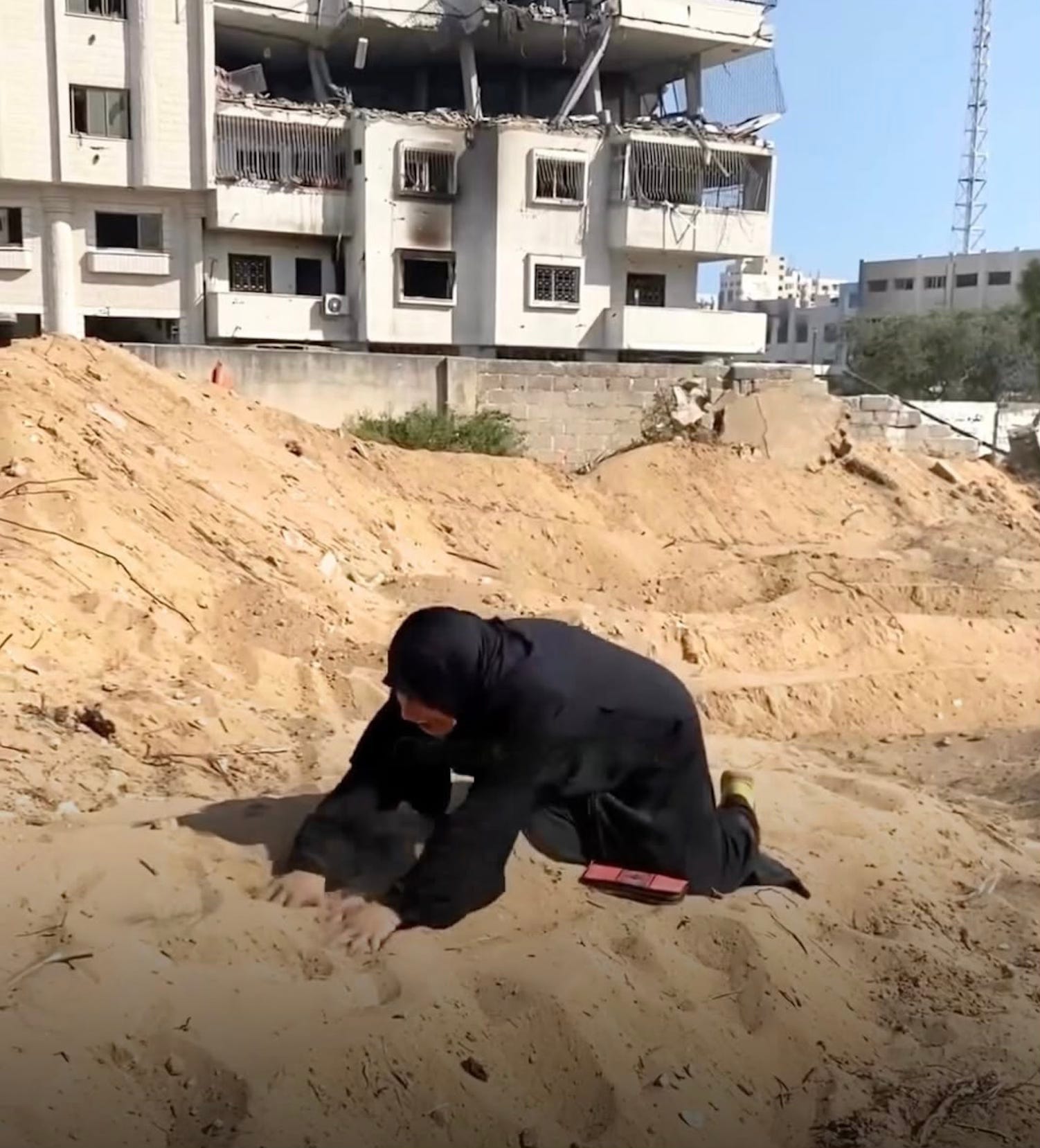
In the first month of the genocide, their sister, three brothers, and father were buried under rubble when Israel struck their home. Their mother survived, but their sister’s body was never recovered, leaving no grave to visit and no marker to stand beside.
This is the third Ramadan they have cooked since that day, preparing food they will not eat and carrying it outside in the names of the family they lost. As the light thins and the call to prayer approaches, they portion the soup into containers and hand it to surviving neighbors, quietly saying their sister’s name, then their brothers’, then their father’s, as though speaking them aloud pushes back against the finality rubble tries to impose. When the fast breaks, they remain standing a little longer, watching others eat.
Ramadan in Gaza now arrives with empty chairs already anticipated. Across Gaza, other families set tables with absence already accounted for. The Asliyya family enters this month without their son Yusuf, fourteen years old, killed by a drone strike while gathering firewood east of Jabalia. Cooking gas is scarce and priced beyond reach, so children collect wood from the edges of destroyed neighborhoods to keep meals possible. Yusuf was trying to secure fuel so his sisters could eat when the fast ended.
His mother, Reem Asliyya, was killed in December 2023 by an Israeli airstrike. Fourteen years earlier, another son, also named Yusuf, was killed during an Israeli incursion into Jabalia. When the second Yusuf was born, the family gave him his brother’s name so memory would remain inside the house. This Ramadan, both brothers and their mother are gone.
The family now gathers in a damaged displacement shelter where the iftar table is modest and portions are measured. Their father, Rassem, has said that Yusuf sold gathered wood to buy food and, when he could, meat for his sisters, doing the work of an adult in a body that was still a child’s. He left one morning to collect enough wood for the first days of Ramadan, and a drone fired directly at him. The family could not retrieve his body for hours as aircraft circled above.
What happened to Yusuf was not an exception in Gaza. It was life under Israeli occupation.
There are no stable days to return to because Israel controls the conditions of instability. It announces a ceasefire and then violates it. It opens a crossing and then seals it shut. It permits aid and then resumes bombardment before dawn.
While American politicians debate ceasefires and security cooperation, families in Gaza are still retrieving children from open ground, even as reconstruction plans are drafted in climate-controlled rooms and funding negotiated far from the blast sites.
A letter published in The Lancet estimates that more than three million years of life have been lost in Gaza since October 7, calculated from recorded direct deaths, not simply bodies but years that should have been lived. More than one million of those lost years belonged to children under fifteen, and the estimate does not include indirect deaths caused by starvation, untreated wounds, destroyed hospitals, contaminated water, and siege.
Years do not vanish, bombs and artillery cut them short. Governments supply the weapons and defend them in language so neutral it sounds procedural. In many Israeli strikes there are no intact bodies to count, entire families reduced to fragments and entered into ledgers that almost certainly undercount the dead.
This is not something that clears by evening. It is funded, signed, and defended with our tax dollars.
The sun in Dublin slips behind another bank of cloud while my children hover near the door with their bikes, waiting to see which version of the sky will win. In Gaza, my friend stands over a stove as the call to prayer approaches, handing out plates of food they will not taste and whispering their sister’s name before serving strangers.
The weather here will change by morning, as it always does, while what happens there continues because it is permitted to continue. The difference is not climate but choice.


So painful just to read , so what about those who are actually going through it. We keep reading all this for so long now but nothing has really changed for the better in Gaza-East Palestine. There are no words to express all that really but inspite of al this even in these horrible conditions life goes on there and also the resistance for liberation of Palestine
Thank you Eman. We should never ever forgive israel, america and all complicits for what they have inflicted and continue to inflict on the innocent Palestinians. No-one is free until Palestine is free 🇵🇸🇵🇸🇵🇸