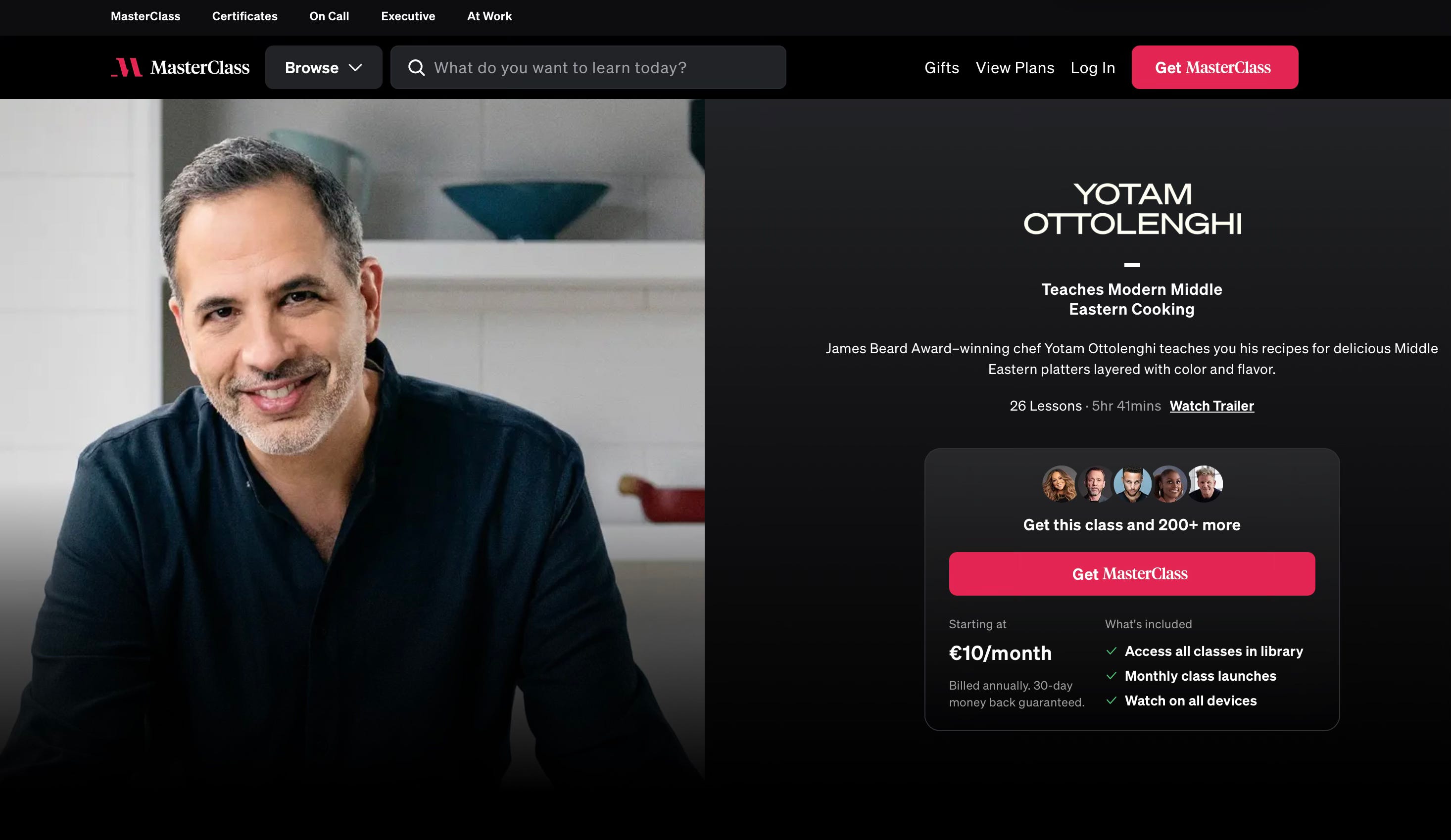
They stole the land, then the menu
A streaming platform crops Palestinian hands out of the frame. An Israeli chef rebrands our survival food as "modern." This is what cultural erasure looks like, one recipe at a time.
The jar of sumac fit my palm like a flattened memory, or like a glass jar that had survived five moves, hundreds of blackouts, and the night we were exiled from Gaza with nothing but what we could carry. When I tipped it, red dust rose. I rubbed a pinch until the scent opened. My mother never measured while cooking, a sprinkle over labneh, a dusting across Baba ghanoush (roasted eggplant.) The motion was small but necessary.
That pinch keeps things alive in our kitchen, where rituals are practical. They pass through fingers that know shortage, that time the exact second oil stops hissing, that steady dough while another hand gently rocks the little ones. My mother and aunts ran the kitchen with quiet authority, where respect was our grammar. “Not so much,” my mother would say, teaching me the economy of a measure. Their strictness cost some casual ease, but it gave me boundaries that taught me how to read a room, when to step back, and how to stay useful without getting in the way. Such skills matter when the walls are closing in.
I never found the rhythm of baking Manaqesh or making Somaqya. When the kitchen fractured into clattering pots and shouted corrections, I moved to the corner. It required a patience that I did not have. Burnt bread felt like blame I could not carry. But when stews simmered and rice steamed, I proudly claimed the counter. I prepped, I cleaned and I made what we had. That was how I contributed while adults argued over cumin and survival. I learned early that not every hand needs to stir the pot to keep the table fed. Sometimes the work is just to keep the space clean while the world burns.
This week a MasterClass trailer appeared. An Israeli chef teaching what they brand as “Modern Middle Eastern” cooking. He smiles over bright platters and marble counters, and studio light that never flickers. He says “confrontation.” but he means genocide. The word is softened for Western ears. On screen, our dishes are reshaped for the camera, vowels are smoothed for viewers who buy spices in plastic jars and never face a checkpoint. Palestinian hands, the ones that kept these recipes alive through displacement and siege, stay out of frame. A settler chef is positioned as the authority on our survival food while our kitchens are being demolished. I asked the platform whose voices shaped the class? The reply arrived fast, automated, and polite. It confirmed what the frame already showed. The people who cooked under bombardment are not needed to explain their own food. The ones who preserved these dishes through occupation do not get to teach them. Instead, a settler gets to rebrand our heritage as “modern,” turning our survival into his innovation, and our memory into his content.
That is not what it looked like at our table. Once during Ramadan the hummus plate was missing. Panic is a luxury we cannot afford. I had fifteen minutes until Athan, a lemon squeezed until its rind split, a processor that groaned. The bowl came back creamy and bright, sharp with citrus and a whisper of garlic, as my mother liked it. I did not learn that in a studio, I learned it at a table that had to be fed while the generator coughed through another blackout. We stretched hummus with the last oil and rubbed za’atar into flatbread on a makeshift saj. No one called it modern. We called it dinner. The urgency of ethnic cleansing left no room for aesthetics.
This erasure did not begin with a streaming platform. It began with the occupation. For decades, the apartheid state has taken our recipes, renamed them, and sold them back to the world as its own. Israeli state campaigns have spent millions rebranding Palestinian dishes as “national heritage.” Military cookbooks have featured our recipes as proof of Israeli identity. In 2008, state-backed teams set Guinness records for “Israeli” hummus while Palestinian kitchens were under siege. They stole the land, then stole the menu. The theft was never accidental, It was policy. A way to claim the soil by claiming what grows from it.
The world wants history plated neatly, resilience as garnish. But some kitchens are for remembering. They pass down a jar that grows lighter with each generation until only the stain on your fingers and the quiet knowing remain. You can still make something from almost nothing. Home dishes like musakhan, maqluba, hummus, and shakshuka get repackaged as sleek, apolitical Israeli or modern Middle Eastern food. Menus call za’atar flatbreads, an elevated snacks without asking whose hands kept the spice alive through occupation and bombardment. That framing erases soil, checkpoints, the forced starvation, and the small decisions that make a dish ours. It turns survival into a trend, and trends forget the hands that built them. The hands that were forced to leave or murdered for staying.
Tonight I will pull the sumac down and make musakhan the way my mother taught me. I will listen for the oil to hush as onions fold in, taste for salt and memory, and when the window opens I will let cumin, diesel and the city’s ordinary noise come in. I do not cook for an audience. I cook to remember who we are. By morning the jar will be lighter, a pale ring at its base, the scent lingering on my fingers. That quiet residue is enough. It was all we were allowed to take, and it is everything.
If you want to push back, Please consider the following:
Email MasterClass: support@masterclass.com
Tag them on social: https://www.instagram.com/masterclass/
Quote the line that stuck with you and let them see the frame they cropped out.
Forward this to someone who thinks “food is just food.”
Write to MasterClass: support@masterclass.comCopy the text below. Change what you need. Send it.
“I am writing about your new MasterClass featuring Yotam Ottolenghi teaching “Modern Middle Eastern Cooking.”
The dishes you feature, hummus, labneh, shakshuka, musakhan, quick shatta, are not neutral recipes. They are Palestinian and Levantine heritage, carried through generations of displacement, siege, and occupation.
Positioning an Israeli chef as the authority on this food, while Palestinians in Gaza face famine and the deliberate destruction of kitchens, is not culturally neutral. It erases the origins of these dishes and turns Palestinian survival into a branded aesthetic.
I ask that you need to reconsider the framing of this course. Provide clear attribution to Palestinian culinary traditions. Reflect on whether amplifying this voice during an active genocide aligns with your stated values.
I expect a direct response, not an automated reply.”
Sources & Verification
• MasterClass Correspondence: The platform’s response regarding cultural context and course framing was received via email on April 15, 2026. The reply, AI-generated, listed dishes including “quick shatta Palestinian chili paste” while positioning the instruction under “Modern Middle Eastern Cooking.” The full exchange is documented and available upon request.
• State Culinary Campaigns: Israeli state agencies (including the Ministry of Foreign Affairs and Ministry of Tourism) have funded global marketing initiatives since the 1990s to brand Levantine and Palestinian dishes as “Israeli” national heritage. This strategy is widely documented in food studies and international reporting as state-backed gastrodiplomacy.
• Institutional Cookbooks: IOF-affiliated publishers and state-backed culinary projects have released cookbooks that frame Arab and Palestinian recipes as proof of Israeli identity, systematically removing their origins. Documented by Israeli food anthropologists and cultural critics.
• The 2008 Hummus Record: In 2008, an Israeli team backed by tourism boards and settlement councils set a Guinness World Record for the largest hummus dish. The event was widely covered as a state-sponsored cultural marketing initiative, launched while Palestinian food systems and movement were heavily restricted under siege. (Coverage: BBC, The Guardian, Reuters, 2008–2010)


Defiance, the secret ingredient of Hummus. 🌱
I always knew that the colonialists Empire builders and those genocidal apartheid supporters, settlers land grabbers in US, UK, Europe steal everything from the People they are trying to dominate and eradicate. They steal the culture and our food and call it their own in order to ENRICH themselves. Why are they the ones that control ALL the financial institutions and the MEDIA, the Epstein class and AIPAC drug barons and those who are hooked by AIPAC and the paedophiles barons who have a hold on the paedos so that they can blackmail them. Look who are Trump financial supporters. They are one and the same. Criticise them -and Israel then they call you Antisemitic!
These crazy psychopaths should be dealt with , call them out boycott them wholesale.