
The Radio That Terrorized Israel
From Gaza to the Naqab to Dublin’s grey shoreline, a 1950s radio becomes a witness to empire’s absurdity.

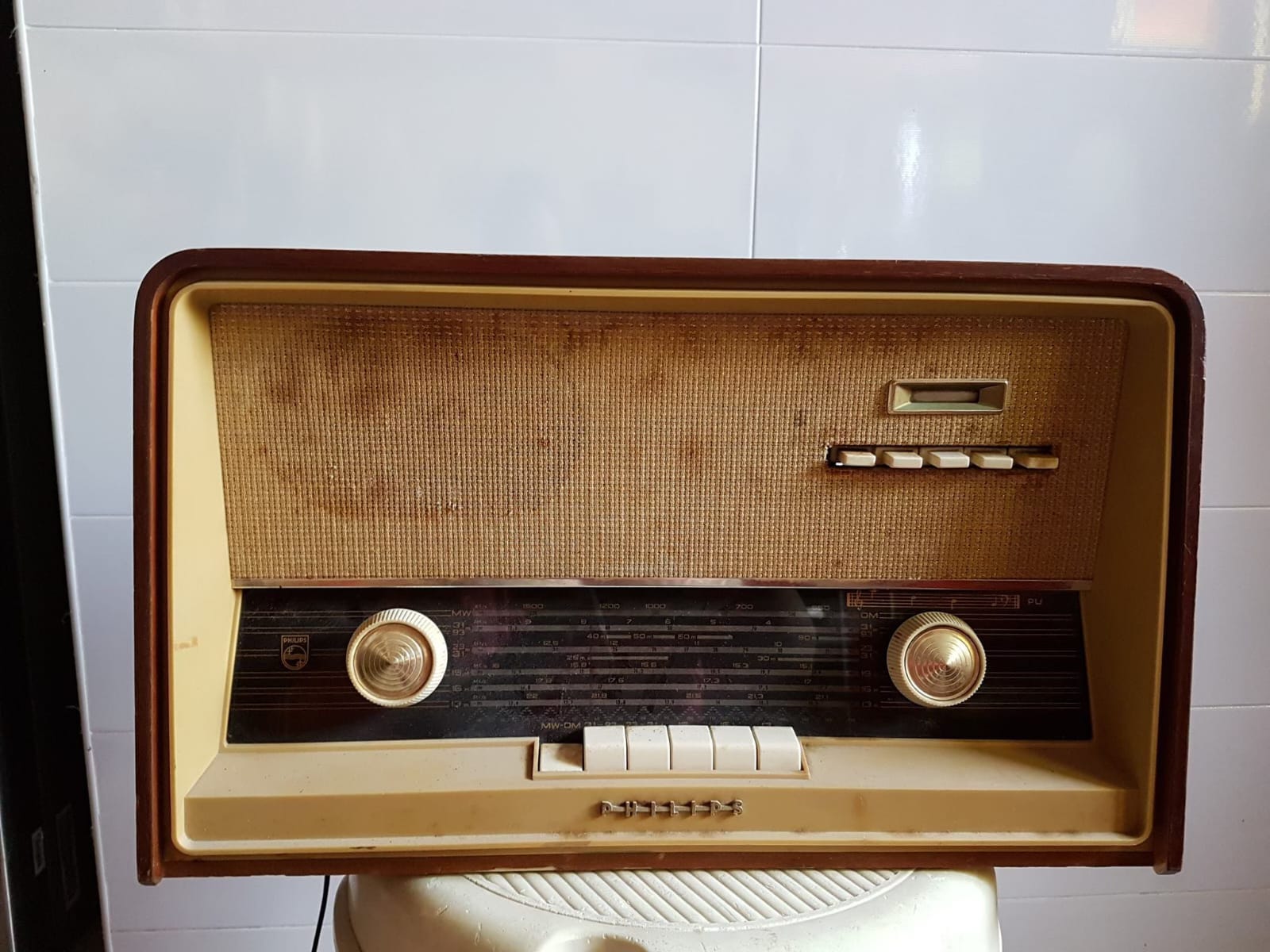
The radio.
Not a radio, the radio. The one that hummed through blackouts, survived more Israeli bombings than most buildings in Gaza, and still works better than the excuses of those who bombed it.
It still smells faintly of dust and burnt air, the scent that lingers after power returns for five short minutes. Its knobs are worn smooth by my mother’s fingers, the brass dulled by years of turning toward Cairo, toward (Qanāt al-Sharq al-Awsat) the Middle East Radio frequency that carried laughter and heartbreak from Egypt to Gaza long before the borders sealed. The sound of Cairo’s late-night dramas lives inside it, suspended between the frequencies of 1958 and forever.
Now it sits under a white sheet in Gaza, wrapped like a body, while I write from Dublin, listening for a signal the world keeps pretending not to hear.
00:13 a.m. Dublin | 2:13 a.m. Gaza —Hours after Carrefour announced its withdrawal from Kuwait and Bahrain under BDS pressure.
We had a Philips radio, the kind museums display to prove people once built things that lasted. Years ago, my mother wrote to the company about fixing its reception. They replied, astonished it still worked, offering to pay for her to ship it to their museum in Eindhoven.
My mother said thank you, no.
Always polite, then defiant.
When I moved out, I begged her to let me take it, the hum of our past tucked onto my own shelf. But she refused. My grandmother’s oud stayed, too. I used to look through its strings at the craftsman’s photo stamped inside, his name fading but proud. I told myself he had seen a free Palestine. Maybe he had. Maybe that was his signature of faith.
Both the radio and the oud stayed with her. The apartment they lived in has been hit too many times to count.
03:47 a.m. Dublin | 5:47 a.m. Gaza —As protesters in Athens, Istanbul, and Rome filled the streets for the fifth night since the flotilla’s hijacking, port workers in Greece refused to unload Israeli-bound cargo.
The Zaharna building towered like a stubborn tooth over our neighborhood. Ten floors on a hill, just tall enough for the occupation to set up home. Soldiers occupied the ninth and tenth floors. We lived on the third. That’s how I learned as a child that occupation has floors, cruelty stacked by rank.
When the power went out, my mother turned the radio’s dial until Egyptian plays filled the dark: a woman crying, footsteps echoing, thunder made from aluminum sheets. Words and sound effects painting pictures that no bomb could erase. Old-school Netflix, free, untouchable, eternal.
I asked again for the radio. She smiled and said no. Her no meant: I miss my own mother, too.
That’s how she taught me resistance, not in slogans, but in ownership of her own story.
06:22 a.m. Dublin | 8:22 a.m. Gaza —While Italy’s Ravenna port workers blocked arms trucks bound for Israel, Turkish dockers joined the strike, declaring they won’t “fuel genocide with our labor.” From Ravenna to Izmir, solidarity is turning industrial.
In 2018, my grandmother’s oud, a pear-shaped string instrument made of warm wood and delicate fretwork, was damaged when an airstrike shook the house. My mother’s priorities were the photos of her family, her father’s watch, and her ID, all tucked inside an emergency black leather bag with golden zippers. She couldn’t afford to carry an oud, and she surely couldn’t carry the radio. She couldn’t save them or protect them from the Zionist savagery.
She owed it to herself to protect her family’s history, so in 2018 she agreed to send the radio to the Philips Museum. She wrapped it in a white sheet as if dressing a child for burial. When she carried it to the post office, Israel denied the parcel permission to leave Gaza.
Palestinians, they said, couldn’t mail “suspicious items.”
A 1950s radio. Deemed a threat.
That was the day I learned: in Gaza, even nostalgia needs a permit.
