
Ways to Maximize Your Boycotting

We don’t lack information anymore. The truth flickers across our screens in real time, smoke rising, bodies carried, mothers wailing. Sudan burns, Gaza bleeds, Congo starves, and we scroll past it with our thumbs. The problem isn’t ignorance, it’s obedience. We keep waiting for the same governments funding genocide to stop it, pretending they’re separate from the regimes they arm. They’re not.
We are living in a mad world of our creation. The only way to move the needle is to starve the system that feeds on us, that drinks from our wallets, our art, our silence. Boycotting and sanctioning is how we start to cut the cord.
5:00 p.m.
They arrived at my door with حلويات a box of pastries and three bags of candy, the kind kids show off like trophies. Full-size bars, bright wrappers, the real deal. They don’t have children but somehow know exactly which sweets make a kid’s eyes light up, their generosity carries precision, a quiet thoughtfulness.
Halloween reminds me my childhood could have stretched a little longer. Long enough to eat sugar without guilt. Long enough to believe the world was something you could fix with kindness and a costume.
They know how much I love candy. That’s how they are, tuned in, observant, unwilling to look away. A powerhouse who walked away from two finance jobs the moment conscience collided with profit. They spend weekends volunteering in soup kitchens, warning their community about ICE raids. And yes, they’re white, and very sorry about it.
Last week they sent snacks for my late-night editing sessions. “Fuel for another Gaza rant,” they joked. I thanked them, smiled, then later realized every single item in those bags sat comfortably on the boycott list.
It wasn’t malice. It’s the trap we all live in. A system so polished it hides its bloodstains behind glossy packaging. Unilever swallowing small soap companies to look ethical. Nestlé pretending to care about clean water while bottling it from Indigenous lands. Ethical consumption is a hall of mirrors. You think you’re doing right, but the reflection always leads back to the same pockets.
I know because I’ve spent months hunting for a dish soap not owned by Unilever. They even took Aldi’s detergent.
These companies know they’re bleeding from BDS. They see the numbers. So they adapted, buying alternatives to hide behind them. What looks local is often a corporate nesting doll. The barcode tells the truth if you bother to look. Most people don’t, not out of ignorance, but exhaustion. They changed the rules because too many of us learned how to play.
The market for skincare, cleaning supplies, and snacks is now controlled by a handful of monstrous companies. But the BDS movement evolved too. I use three apps to trace product origins before releasing that familiar sigh of frustration. Ownership keeps shifting. One day it’s independent, the next it’s Procter & Gamble or PepsiCo.
Every few months, I scan again to make sure. They have PR laundering machines. I have my will.
So, dear reader, if you’re already boycotting, don’t brush me off. I’m not here to tell you you’re doing it wrong. I’m telling you the game shifted. They noticed, and they’re misleading us through invisibility.
2:15 a.m.
BDS isn’t about catching each other slipping or performing purity. It’s a small, daily act of refusal. A quiet rebellion in a world where every purchase feels like complicity. The language of resistance translated into what we buy, or don’t buy. And it works. Israel feels it. Their economy is bleeding. They even forced Gaza to source its aid from Israeli brands. The settlements are profiting from Gaza’s starvation. It is sick, but also desperate. The United States can fund the bombs, but the rest of the world has been funding Israel’s economy, and that tide is turning.
They don’t get to profit from our destruction. They can’t. Even law, flawed as it is, understands that principle. If someone kills their parent, they cannot inherit them. The system can imagine that cruelty but will not let the killer collect a reward.
And yet Israel does exactly that. They bomb Gaza, starve it, and then demand that all incoming aid be sourced from Israeli settlements. They turn siege into a business model. The people they have crushed are forced to buy from their executioner.
Clearly, they know, and now you should too. BDS is one of the most powerful forms of direct action that will not land you in jail. Yet. Israel didn’t invent barbarism; it just mastered the marketing.
Every unchecked war criminal clears the path for the next. The British in Ireland. Assad in Syria. The UAE in Sudan. The United States across the Americas. Each one studies the silence that came before, learning how to dress horror in bureaucracy. Every “exception” becomes a manual in immunity.
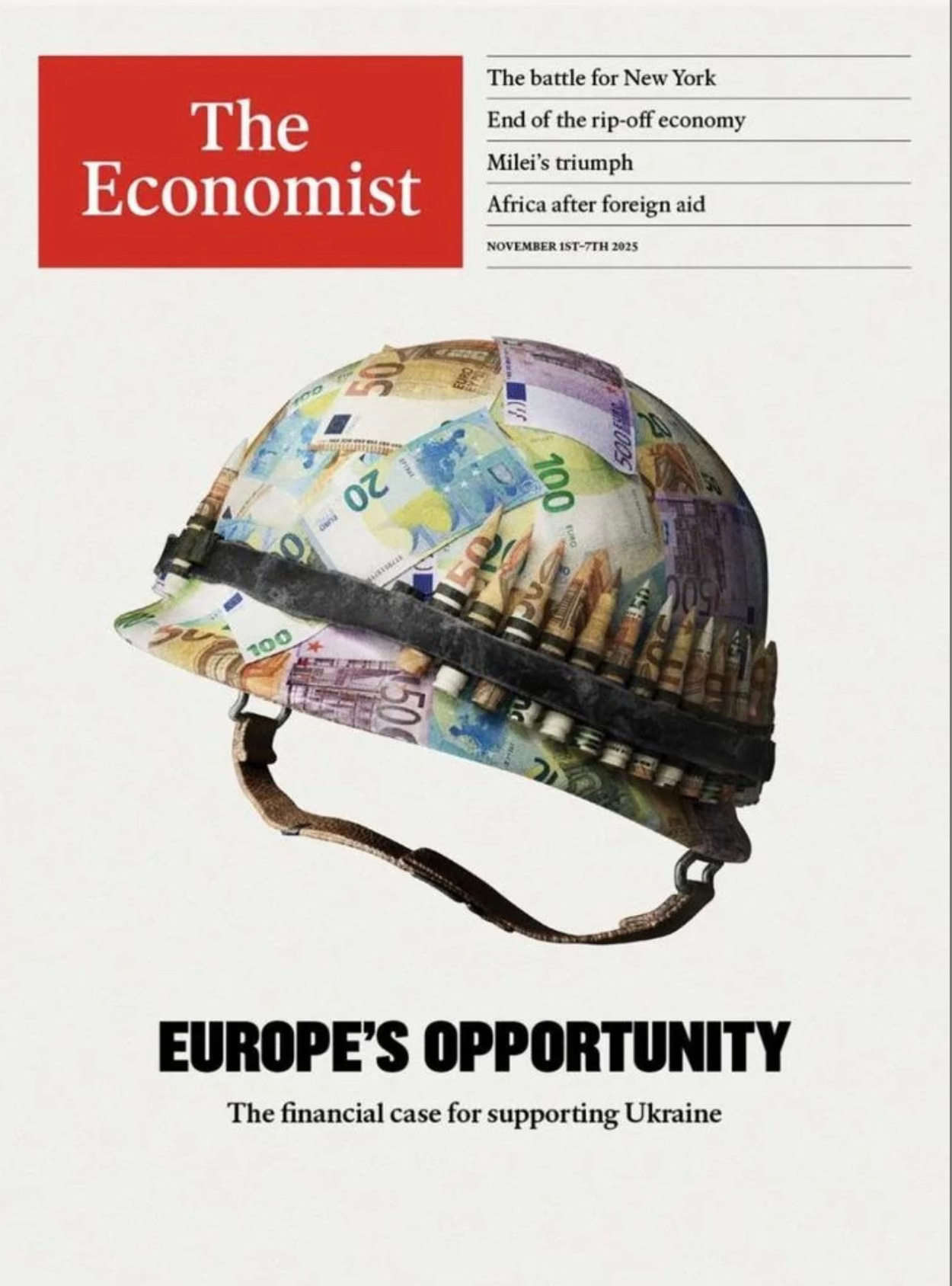
And while all this unfolds, the media sells it like a stock tip.The Economist runs a cover showing a soldier’s helmet made of euro bills, bullets tucked neatly around it, titled “Europe’s Opportunity.” Another shows a businessman smothered by a yellow life vest labeled “Pull for Inflation.” Marketable misery.
The rich do not see tragedy. They see opportunity. That is how consent gets manufactured. Not by hiding the truth, but by dressing it in profit margins. They make war look necessary. They turn human suffering into investment potential. And you can destroy all of that by not giving them your hard-earned money.
The extremists are loud but few, concentrated in power and obsessed with destruction. The rest of the world is split between those trying their best and the apathetic, The people who say they “don’t know enough,” who “don’t talk politics,” who “just want peace,” are the most dangerous.
That is the real threat. Not savagery, but indifference.
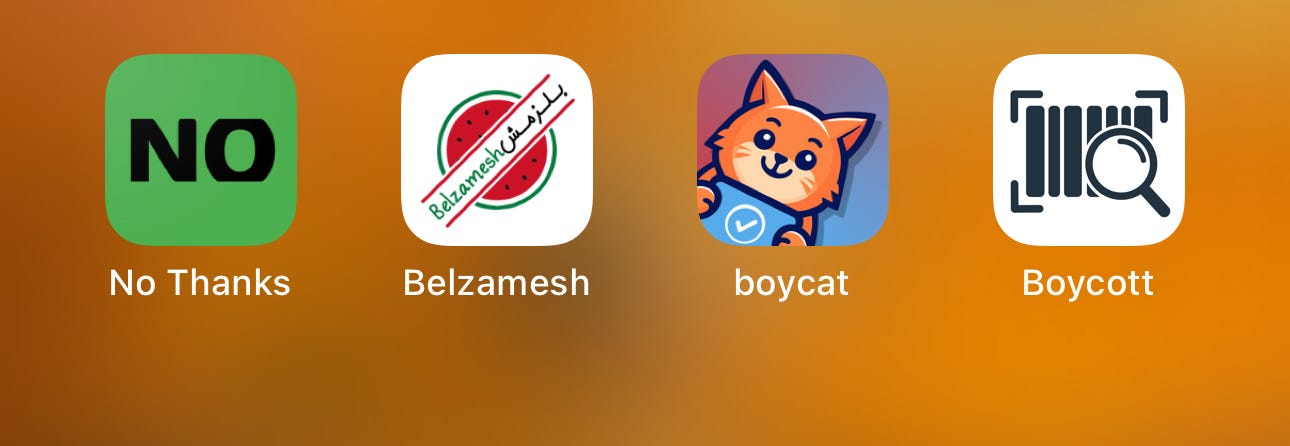
So yes, download the BDS apps. Scan the barcodes. Check the details. But remember, this is not about perfection. It is about presence. About refusing to let apathy sneak into your cart.
BDS is not a moral test. It is a compass, a way to walk toward justice one small decision at a time. It is the difference between funding the fire and helping put it out.
If that sounds small, remember how it began: a friend at the door, three bags of candy, and a choice that seemed harmless until you looked closer.
May true friends find you, the kind who love loudly and never look away
Your pieces always make me think and rethink how the entire system we are immersed in is damn wrong... or rather not simply wrong... but the opposite of what it should be... in any case we continue to boycott... as much as possible ✌🏻🇵🇸
Absolutely aligned with the spirit of this text. It powerfully and precisely exposes one of the most urgent truths of our time: injustice is no longer hidden... it unfolds before our eyes, and through silence or indifference, we legitimize it.
The BDS movement (Boycott, Divestment, Sanctions) is one of the most effective tools of civil resistance against systems that profit from occupation, genocide, and colonialism. This piece rightly shows that resistance isn’t always loud or dramatic; sometimes it’s a simple choice at the store, a barcode scan, a quiet “no” to companies that profit from human suffering.
With honesty and vulnerability, the text reveals how even well-meaning intentions can fall into the trap of the system and that’s not a failure, but a reflection of how complex the struggle truly is. This human, nonjudgmental perspective, paired with a call for awareness and presence, is deeply valuable.
In a world where media turns suffering into investment potential, every conscious choice, every small boycott, every refusal to buy is a step toward justice. This text reminds us that we do have power... not in grand slogans, but in our everyday decisions.
And if we practice that power together, we can change the world✊️🤍🕊